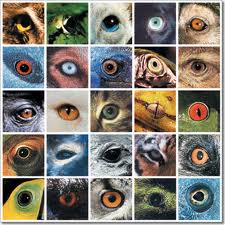
I have always loved
nature, when I was a small child I would cry because the wild deer would run
away from me. The fact that they did not understand I meant them no harm and
merely wanted to be their friend was a constant anguish to my young heart.
However, though I loved nature, I rarely thought about from whence it came or
how it came about; it was simply always there.
This psalm has been my favorite for as long as
I can remember, I loved it even before I could read it for myself. Though I
used to love it purely because of the Leviathan and the Rock Badger. As I grew
a little older and I was able to read and understand for myself, I began to see
this psalm in a new light. I began to think about from where this wonderful nature came and how mighty and powerful God
was to bestow such a wonderfully glorious world on little old me.
I still love nature, but now it affects me in a
very different way. The sight of a purple tulip in spring will still bring a
smile to my lips, but it also reminds me of how wise God is in all the
intricacies of creation, and how short I fall in all my attempts to understand
all His powerful works.
24 How
many are your works, Lord!
In
wisdom you made them all;
the
earth is full of your creatures.
In the previous verses, the Psalmist praises God for
the individual wonders He had made. Throughout verses 10 through 23 he paints a
gorgeous picture of nature, with all her little facets. These characteristics
display the caring nature of God as He accounts for and takes care of every
aspect of His creation. Verse 24 comes, almost as a doxology, after this
eloquent ode to God’s creative and sustaining powers as if the psalmist is
unable to contain himself and must burst out in awe and amazement of God. After
thirteen verses of systematically unfolding all the ways in which God upholds
creation, the psalmist summarizes his entire thesis in one small verse.
How many are your
works, Lord! The psalmist is stumped; at this moment he has
nothing left to say. He realizes that if he tries to catalogue all the ways in
which God works he would still be at it today! The only thing left for him to
do is cry out in wonder at the majesty of God.
In
wisdom you made them all; the earth is full of your creatures. This declaration is another statement testifying to the greatness of this mind-blowing
creation in which the psalmist finds himself. Not only are God’s works numerous
but they are also made in God’s wisdom. We
live in the midst of a creation that was created with the divine and perfect
wisdom of an all-powerful God. In this verse, creatures do not merely mean the
wild panda bears, or the cuddly kitten that is curled up at your feet but, we humans, are included in this list of
God’s creatures. Not only are we one of His creations but we are also made in
His image and bear His characteristics. We are able to reason and cultivate
wisdom, unlike the dumb horse, we are able to commune with fellow humans in a
small imitation of the way God communes with Himself, we are able to receive
the Sprit of God which brings us not only physical animation, but an immortal
soul which is able to one day enter into the presence of the everlasting
Creator.
25 There
is the sea, vast and spacious,
teeming
with creatures beyond number—
living
things both large and small.
26 There
the ships go to and fro,
and
Leviathan, which you formed to frolic there.
In these verses, the psalmist has once
again found his voice and continues to survey the ways in which God has worked
in the world. In the previous verse the psalmist states that the earth was full of God’s creatures, here
he states that the sea also teems
with those He has made. In case the hearer or reader of this psalm missed the
psalmist’s point that the whole of
the world, earth, sea and sky, were positively filled to the brim with
declarations of the existence of God, he lays it out plain and simple. By going
from one area, the earth, and then to another, the sea, the psalmist explains
the all-encompassing creation in such a way that lets even little children in
on what he has experienced.
This psalmist is a master at painting huge
pictures that then narrow down to focus on a single image which represents the
whole. A ship, a rather common image, is seen traveling on these waters which
he has just described as crawling with creatures and is representative of the
entire human race. In just one half of a sentence, the psalmist includes
humanity in this picture of God’s handiwork, and in the other half of the
sentence the entire sea is symbolized in the single image of the leviathan.
27 All
creatures look to you
to
give them their food at the proper time.
28 When
you give it to them,
they
gather it up;
when
you open your hand,
they
are satisfied with good things.
The theme of food is rampant throughout this psalm.
Earlier, in verses 14-15 and verse 21, the creatures of God are provided with
food from the earth, cultivated by the very hand of God Himself. And again in
these verses he states the all creatures,
not just dumb beasts or man, are satisfied unto satiety with good things by the
hand of God. The psalmist brings the common act of eating to our attention and
reminds us that without the hand of God opening and providing us with our daily
bread, we would never be supplied with our needs. Not only is the psalmist
reminding us of our total dependence on God for our every need, he is also
reminding us of what God has done in the past.
For an Israelite, the thought of gathering up food
provided directly from the hand of God would not be so nebulous an idea. In the
desert wilderness where the sons of Adam wandered for forty years, the people
gathered to their satisfaction “manna,” the food of heaven, which appeared on the
ground every morning. Every small Israelite child would know this story and
about how God had provided for his forefathers.
And he humbled you and let you hunger and
fed you with manna, which you
did not know, nor did your fathers know, that he might make you know that man
does not live by bread alone, but man lives by every word that comes from the
mouth of the LORD. Deuteronomy
8:2-4
29 When
you hide your face,
they
are terrified;
when
you take away their breath,
they
die and return to the dust.
30 When
you send your Spirit,
they
are created,
and
you renew the face of the ground.
These two
verses serve as an antithesis to the two verses that come before. In verse 27
all creatures turn their faces to God in humble dependence on Him for food and
in verse 29, when God hides His face from them, they are utterly terrified,
terror-stricken, and convulsed. Even the humble beast without a soul or an
understanding of God’s plan of redemption is left in a state of total despair
and inner chaos when the face of its Creator is hidden from him. How much
greater is the inner anguish found in the soul of one who has blatantly rejected the hand of grace?
When
you take away their breath, they die and return to the dust.
Verse 29b continues
to carry the antithetical parallel to verse 28. The hand of God abundantly
gives food which sustains, but that very same hand can take away the breath of
life. This seems unfair. Why does God provide food in abundance for some and
hardly enough to sustain life for others? Only one sentence is needed to answer
this question: because God is holy and
merciful. God’s holiness means that
the instant sin entered the world creation was condemned to die. For God to be
holy means that nothing unholy can be
tolerated in His presence. The whole wild and beautiful earth that is God’s
creation was turned in an instant from a blooming paradise into an inferno
filled with writhing sin. In light of this, the proper questions to ask are
not, “why doesn’t God bless everything equally?” but rather “why does God bless
anything at all?” Why are we sitting
here writing articles and in turn reading them? Why are we privileged to have a
life sustaining sun? Why are we alive and breathing at all? This is due
completely to His mercy.
When the
blackness entered the wonderful creation and turned paradise into a breeding
ground for festering wounds, God could have easily, beyond easily, turned right
around and let fall His sustaining hand. But He didn’t; He had a plan from the
beginning of eternity to save mankind, and in doing so, He brought Himself
glory. Why did He do this? Why did He decide to save a withering creation at
the cost of His Son? There is no answer for that besides His mercy, His
compassion towards those He calls His own, and His forgiveness for those who
call Him God. Never again can you dare to call God “unfair,” the very fact that
we are alive means that God is “unfair.”
When you send your Spirit, they are created,
and you renew the face of the ground.
In God’s
goodness He didn’t just leave the earth as it was, to spiral downwards into
oblivion. Not only did He decide to continue to sustain the earth, but He
decided to renew it. He didn’t merely
let the former die and be done with it all, but He also sends His very Spirit to bring renewal again to the
earth. Through the Spirit that is sent from His hands the old passes away and a
new generation covers the earth. Not only is the psalmist presenting a
fundamental characteristic of God in this verse, that He is a God merciful and
gracious, slow to anger, and abounding
in steadfast love and faithfulness, (Exodus 34:6) but he is also harkening back
to a renewal God had performed in the past. He is reminding us of the story of
the destruction of the earth and the renewal of the covenant of grace through
Noah.
For
behold, I will bring a flood of waters upon the earth to destroy all flesh in
which is the breath of life under heaven. Everything that is on the earth shall
die. But I will establish my covenant with you, and you shall come into the
ark, you, your sons, your wife, and your sons' wives with you. Genesis 6:17-18
Again and
again the psalmist brings the reader or hearers attention to the seemingly
ignored things of life. The beauty of the leviathan playing in the seas, the
magnificence of the unshakable earth, the tall trees that provide food for one
and shelter for another, the life which comes from the hand of God, and finally,
how mighty and wise is the Creator of all.
When Reading, Singing, or Praying this psalm:
- Acknowledge that God is Holy, Wise and Powerful.
- Realize that the mighty God who is full of power is also a loving God full of mercy.
- Understand that your life here on earth is a gift and not to be taken for granted.
- Comprehend that this perfect God is willing to save reeking sinners.
- Pay attention to the small things in life. Don’t rush by a perfect sunset en route to “more important things.” Stop and realize the blessing the sun is in our lives.
Ask yourself:
- Do I see the Creator through creation, or do I merely acknowledge His works?
- Death is the only sure thing in life; how can I remember that God knows even when the smallest sparrow falls?
- Though the world is full of people, how can I accept that each life is a miracle?
- Do I resent that only God can sustain my life?
- How can I bring renewal to those around me by sharing the gospel?
- How can I study God’s word to better understand Him?

